
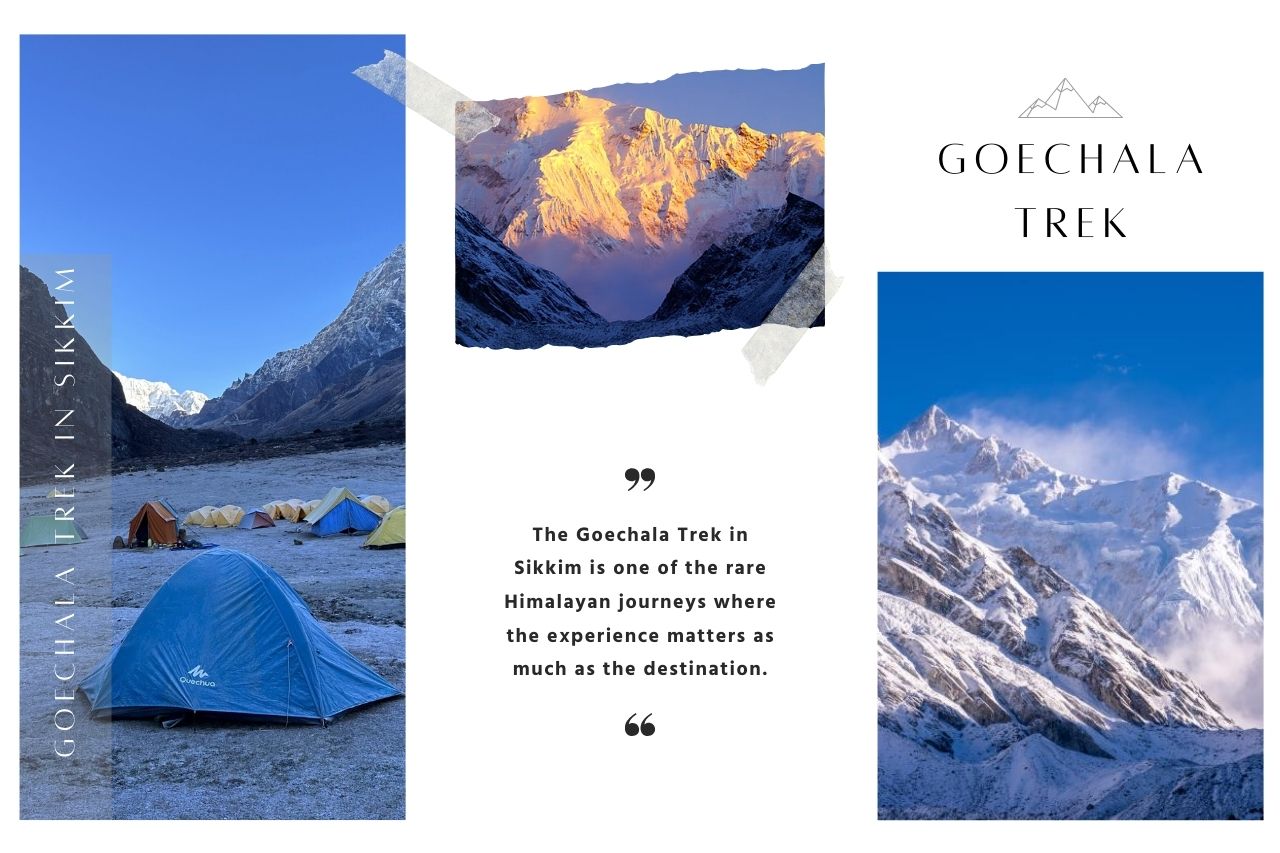
The first thing you notice on the Goechala Trek is not the mountains — it’s the silence. A deep, Himalayan silence broken only by the crunch of your boots, the rush of glacial streams, and your own breath growing heavier as you climb. This trek doesn’t rush you to a summit. It slowly pulls you in, step by step, until the mountains begin to feel personal.
Starting from the historic town of Yuksom, the trail gradually climbs through changing landscapes and climates, offering a sense of isolation that few treks in India can match. What makes the Goechala Trek truly special is its closeness to massive snow-covered peaks and the feeling of walking in a protected, untouched part of the Eastern Himalayas.
Goechala Trek at a Glance
| Detail | Information |
|---|---|
| Start & End Point | Yuksom, West Sikkim |
| Highest Point | ~15,100 ft (Goechala View Point 1) |
| Total Duration | 10–11 days (including acclimatization) |
| Total Distance | ~65–70 km (round trip) |
| Difficulty | Moderate to Difficult |
| Best Seasons | March–May, Oct–Nov |
| Nearest Airport | Bagdogra |
| Nearest Railway Station | NJP |
Route & Itinerary: How the Trek Actually Unfolds
Rather than rushing altitude, the Goechala route is designed to help your body adapt gradually.
- Day 1: Reach Yuksom and complete permits
- Day 2: Yuksom to Sachen (forest trails)
- Day 3: Sachen to Tshoka (wooden bridges and waterfalls)
- Day 4: Tshoka to Dzongri (steep climb, open meadows)
- Day 5: Acclimatization at Dzongri with sunrise hike
- Day 6: Dzongri to Thansing
- Day 7: Thansing to Lamuney
- Day 8: Early‑morning hike to Goechala View Point 1, return to Thansing
- Day 9–10: Gradual descent back to Yuksom
Due to government regulations, trekkers are allowed only up to Goechala View Point 1, not the actual pass.
Why Goechala Trek Feels Different from Other Himalayan Treks
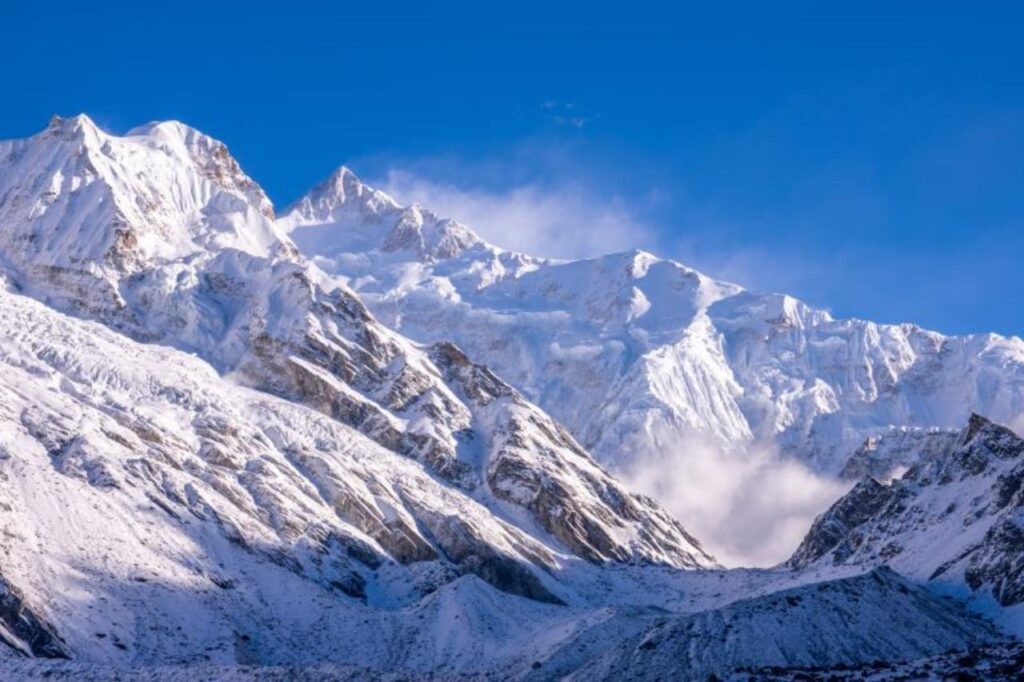
Most Himalayan treks show you mountains. Goechala makes you walk with them.
From the very first day, the trail passes through thick forests inside the Kanchenjunga National Park — a protected UNESCO World Heritage Site. As altitude increases, the scenery shifts dramatically: humid forest floors give way to cold alpine valleys, wide meadows, and finally barren, wind-scoured landscapes where Kanchenjunga dominates the skyline.
What sets Goechala apart is proximity. Very few Indian treks place you this close to an 8,000‑meter peak. On a clear morning at the viewpoint, Kanchenjunga doesn’t feel distant — it feels overwhelming.
These Are the Major Attractions That Make the Goechala Trek Worth It
Here are the major attractions of the Goechala Trek. These are the reasons this journey stays in your heart long after you return.
1. Close-Up Views of Mt. Kanchenjunga
The greatest attraction of the Goechala Trek is its extraordinary proximity to Mt. Kanchenjunga (8,586 m), the third-highest mountain in the world and the highest peak in India. Unlike many Himalayan treks where towering peaks remain distant, Goechala brings you face to face with this colossal massif.
At Goechala View Point 1, trekkers witness Kanchenjunga rising dramatically from the surrounding glaciers, often glowing gold and pink at sunrise. The sheer scale of the mountain at this distance is humbling, making this moment one of the most memorable in Indian trekking.
2. Sunrise at Dzongri Top
Dzongri Top is widely regarded as one of the best sunrise viewpoints in the Eastern Himalayas. Reached on an acclimatization day, this short climb rewards trekkers with a panoramic view of snow-covered peaks stretching across the horizon.
From Dzongri Top, you can see:
- Kanchenjunga range
- Mount Pandim
- Kabru peaks
- Simvo and surrounding ridgelines
As the first sunlight hits the mountains, the entire range slowly changes color, creating a quiet, almost spiritual atmosphere that many trekkers consider a highlight even before reaching Goechala.
3. The Forest Trails of Kanchenjunga National Park
A major attraction of the Goechala Trek is its passage through Kanchenjunga National Park, a UNESCO World Heritage Site. The initial days of the trek wind through dense forests filled with oak, pine, bamboo, and rhododendron trees.
In spring, these forests burst into color with blooming rhododendrons, while in other seasons they offer a calm, shaded walk accompanied by birdsong and the sound of flowing streams. This gradual transition from lush forest to alpine terrain is one of the most rewarding aspects of the trek.
4. Changing Landscapes with Altitude
One of Goechala’s most fascinating attractions is the dramatic shift in landscapes as altitude increases. The trek takes you through multiple climatic zones, each with its own character:
- Subtropical forests near Yuksom
- Temperate woodlands around Tshoka
- Alpine meadows near Dzongri and Thansing
- High-altitude glacial valleys near Samiti Lake and Goechala
This constant change keeps the trek visually engaging and makes every day feel distinct from the last.
5. Samiti Lake: A High-Altitude Jewel
Samiti Lake is one of the most serene and visually striking attractions on the Goechala Trek. Located near the higher camps, this glacial lake reflects surrounding peaks like Mount Pandim and Kabru, often appearing perfectly still in the early morning hours.
The lake holds religious significance for locals, and trekkers are expected to treat the area with respect. Its calm presence, surrounded by barren alpine terrain, offers a rare moment of stillness before the demanding climb to the Goechala viewpoint.
6. The Challenging Summit Morning to Goechala View Point
The early-morning ascent to Goechala View Point is both the most physically demanding and emotionally rewarding part of the trek. Starting well before sunrise, trekkers navigate cold temperatures, thin air, and icy terrain.
Reaching the viewpoint just as the sun rises over Kanchenjunga creates a powerful sense of achievement. This moment—earned through days of steady effort—is often described as the emotional climax of the trek.
7. Dzongri and Thansing Meadows
The open meadows of Dzongri and Thansing provide a striking contrast to the dense forests below. These wide, grassy expanses are framed by towering peaks and open skies, creating some of the most scenic campsites on the trek.
At night, these meadows offer clear views of the stars, while during the day they serve as perfect resting points to absorb the vastness of the Himalayan landscape.
8. Rich Flora and Fauna
Goechala’s route supports remarkable biodiversity. Depending on the season, trekkers may encounter:
- Vibrant rhododendron species
- Himalayan monals and other high-altitude birds
- Rare alpine plants
While wildlife sightings are never guaranteed, trekking through a protected national park adds a sense of ecological importance to the journey.
9. Sense of Isolation and Wilderness
Unlike more commercial treks, Goechala retains a feeling of remoteness. There are no permanent settlements beyond Tshoka, and no motorable roads after Yuksom.
This isolation allows trekkers to disconnect completely from modern distractions and experience the Himalayas in their raw, untamed form—a major attraction for those seeking solitude and mental clarity.
10. Cultural and Historical Significance of Yuksom
The trek begins and ends in Yuksom, a town of great historical importance in Sikkim. As the former capital of the kingdom, Yuksom adds a cultural layer to the trekking experience. Visiting local monasteries and interacting with residents offers insight into Sikkim’s heritage before and after the physical challenge of the trek.
Best Time to Do the Goechala Trek….
Choosing the right season for Goechala is not just about weather — it’s about what kind of experience you want.
Spring (March to May)
Spring is when the forest comes alive. Rhododendrons bloom in layers of red, pink, and white, and birdlife is at its peak. Cloud cover is more common, but the trail feels vibrant and forgiving. This season is ideal for trekkers who enjoy nature as much as views.
Autumn (October to November)
Autumn offers the clearest mountain views of the year. Nights are colder, but mornings reward you with sharp silhouettes of Kanchenjunga and surrounding peaks. If photography and big mountain vistas are your priority, this is the best season.
Winter (December to February – Why It’s Usually Avoided)
Winter trekking in Goechala is technically possible but rarely advisable. Heavy snowfall hides trail markings, streams freeze, and evacuation becomes extremely difficult. January and February see near‑complete closures due to safety concerns.
How Difficult Is the Goechala Trek — Really?
Goechala is often described as “moderate to difficult,” but that label hides the real challenge.
The difficulty comes from consistency, not technical climbing. Expect:
- 6–8 hours of walking on most days
- Thin air above 12,000 ft
- Steep ascents near Dzongri and Lamuney
- Sub‑zero nights at higher camps
The hardest day is the pre‑dawn climb from Lamuney to Goechala View Point 1. It’s cold, dark, and physically draining — but it’s also where most trekkers experience the emotional high point of the journey.
Is Goechala Suitable for Beginners?
Beginners can attempt Goechala only with serious preparation. Prior experience on at least one high‑altitude trek, strong cardiovascular fitness, and mental resilience are essential. This is not a trek to “learn as you go.”
Permits, Rules & Restrictions (Often Explained Poorly)
Goechala lies inside a protected national park, which means strict regulations apply:
- Trekking without a registered guide is not allowed
- Entry permits are issued only at Yuksom
- Plastic use is strictly monitored
- Camping is allowed only at designated sites
Foreign nationals require additional permits (ILP and PAP), which are usually arranged by authorized trek operators.
What to Pack — Practical, Not Excessive
Clothing Essentials
- Moisture‑wicking base layers
- Insulated down jacket
- Waterproof outer shell
- Thermal innerwear for nights
- Sturdy, waterproof trekking boots
Gear That Actually Helps
- Trekking poles (highly recommended)
- Sleeping bag rated for −10°C
- Headlamp with spare batteries
- Sunglasses and sunscreen
Small Things That Matter
- Lip balm and moisturizer
- Energy snacks
- Personal medications
- Copies of permits and ID
Goechala Trek Cost: A Realistic Breakdown
The cost varies depending on the operator and inclusions, but a realistic estimate is:
- Base trek package: ₹16,000–₹25,000
- Transport (Bagdogra/NJP to Yuksom): ₹2,000–₹3,000
- Insurance & permits: ₹500–₹1,000
Expect a total expense between ₹22,000 and ₹30,000 for most trekkers.
FAQs About Goechala Trek
The highest point accessible to trekkers is Goechala View Point 1 at approximately 15,100 ft.
Most itineraries require 10–11 days, including acclimatization and travel days.
Yes, when done with a registered operator and proper preparation. Risks mainly involve altitude sickness and weather changes.
Beginners can attempt it only with prior high‑altitude experience and adequate fitness training.
October and early November offer the clearest views due to stable post‑monsoon weather.
No. Trekking without a certified guide is strictly prohibited.
Goechala is not a trek you finish and forget. It stays with you — in tired legs, quiet pride, and memories of standing face‑to‑face with Kanchenjunga at sunrise. If you’re looking for a Himalayan experience that feels earned rather than handed to you, Goechala delivers.
Train well, respect the mountains, and walk slowly. Goechala rewards patience.
Read Also…
>> The Coldest Place in India: A Frozen Wonderland Worth Exploring